
Powered by LifeProven
Podcasts
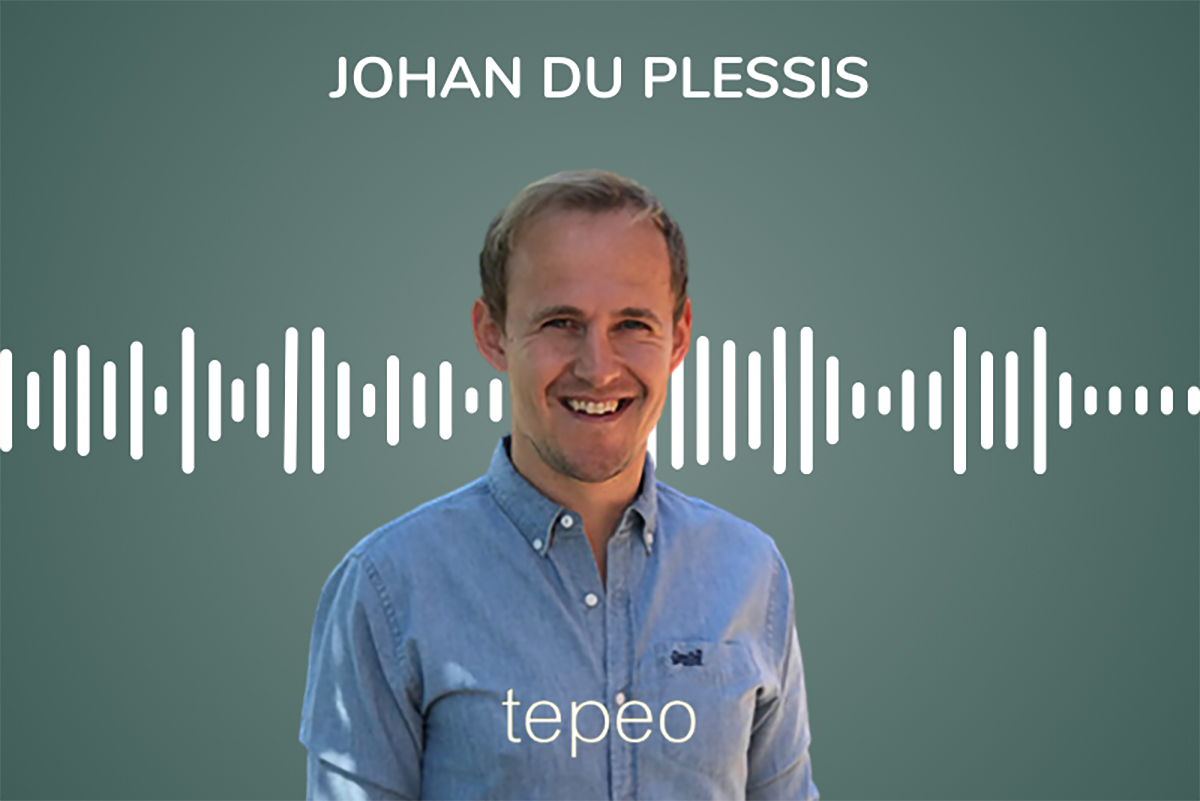
Unlocking the Future of Home Heating: Zero Emissions and Innovation with Johan du Plessis of tepeo
Unlocking the Future of Home Heating: Zero Emissions and Innovation with Johan du Plessis of tepeo
Season 2, Episode 5 - with Johan du Plessis, founder and CEO tepeo:
Episode summary:
Listen in as we reconnect with Johan du Plessis, founder and CEO of tepeo, a true pioneer reshaping the landscape of home heating with zero emission boilers (ZEB). In this conversation, Johan shares his remarkable journey from oil and gas to the forefront of renewable energy, bringing to life a revolutionary high-density thermal storage device. We explore the evolution of this eco-friendly technology from its certification milestones to its expanding market presence. Discover the exciting strides made in product development, the trials of scaling up production, and the triumphs of meeting the surge in demand for sustainable heating solutions.
The shift to sustainable home heating is not just about technology; it's a story of people making a conscious choice for the environment. Our chat with Johan delves into the financial and ecological considerations of adopting zero-emission systems. We discuss the initial costs versus long-term savings, the varying motivations of eco-conscious consumers, and the integration of smart tech and photovoltaics. This segment sheds light on how customers from different walks of life are embracing these innovative systems, primarily driven by the desire to minimise their carbon footprint.
The episode wraps up with an insightful discussion on the broader challenges and opportunities in the energy industry amidst the global shift from fossil fuels. Johan provides a candid look at the impact of the pandemic, the fluctuating energy market, and the unique situation in Scotland with its renewable energy initiatives. We touch on government incentives, the practical aspects of green technology adoption, and the importance of partnerships with housing developers. This is an episode not to miss if you're keen on understanding the nuances of decarbonizing heating systems and the energy industry's future in a post-COVID world.
Previous episode: https://www.lifeproven.co.uk/podcast/future-of-heating-accelerating-the-transition-from-fossil-to-renewable-energy-with-zero-emission-boilers
About Johan du Plessis:
Johan du Plessis is an engineer by training. His professional journey began in the oil and gas sector, but he quickly realized that it wasn't the right fit for him. Driven by a desire to contribute to the energy transition, du Plessis spent some time in management consulting before ultimately returning to the energy sector. He developed a deep interest in the challenges associated with managing distributed and high renewable grids, especially those like the ones being developed in the UK. His curiosity was particularly piqued by the implications of adding a substantial amount of renewable energy to a grid, focusing on the resulting changes in grid physics and the complexities of managing an energy system. This interest was a key factor in the founding of Tepeo, a company started by du Plessis six years ago.
About tepeo and the zero emission boiler:
Founded in 2018, tepeo embarked on a mission to provide customers with a low-cost, low-carbon, and smart alternative to fossil fuel heating. After extensive research and development, which involved designing, building, testing, and trialing various methods, Tepeo successfully culminated their efforts in creating the Zero Emission Boiler (ZEB). This innovative product, launched in 2021, is specifically designed to be a direct and simple replacement for traditional gas, oil, or LPG boilers.
The ZEB stands out for its ease of installation, typically completed within a day, seamlessly integrating into existing plumbing systems. What sets it apart is its revolutionary approach to heating, transitioning users from fossil fuels to electricity. This shift is facilitated by the ZEB's unique ability to store electricity in an incredibly dense form, making it one of the most energy-dense storage solutions on the market. With a capacity to hold 40 kilowatt-hours of energy in a compact unit akin to a washing machine, the ZEB efficiently converts stored energy into heat for homes and hot water tanks.
The company is committed to developing new solutions to facilitate the transition of more homes away from gas and oil. Tepeo's vision is clear: to help millions of homeowners heat their homes efficiently and sustainably, contributing to the global effort of not heating the planet.
Podcast Highlights:
Managing the energy system
"I really got fascinated by this challenge of how we're going to manage distributed grids and high renewable grids such as the one we're building in the UK, what happens when we just put loads and loads of renewables on a grid and what happens to the grid physics and the challenges of managing the energy system. And that was part of the genesis for the idea of Tepeo because a big part of the problem is going to be heating and how we decarbonize heating is going to be a big part in the future of how we manage the energy grid. So, yeah, four years ago I started Tepeo and at Tepeo we have developed what we call a ZEB or a zero emission boiler. It is a direct plug-and-play replacement for your existing boiler, be that a gas or an oil or an LPG boiler. We just come along and it takes about a day. We take out your existing boiler, we plumb this one into the same pipes. But what we do is we take you off of oil or gas so you're no longer using fossil fuels for your heating and you're just using electricity. But what we do is we take electricity and we store it in a very high-density way inside the product, so it's a thermal storage type device. It's the most energy-dense form of energy storage you can buy today. So we store 40 kilowatt hours in something the size of a washing machine and then we extract that heat, put it into your central heating system to heat your home and your hot water tank, and that's how it goes."
What is tepeo?
"At a high level. What we're doing is we're taking electricity from the grid or from solar on your roof, although that is currently in beta at the moment. So mostly you know, taking from the grid. We are storing that electricity as high-density thermal energy, so heat, in a very, very dense block, basically, that is highly insulated, and we are then extracting that heat and putting that into your water system. So we blow air through the centre of this core and that air goes over a heat exchanger and that heat exchanger has all your plumbing and all your piping or water running through it that goes out to your radiators. So most of what you'll see inside the device. You would see the same stuff inside a conventional gas boiler the same switches and temperature measuring devices and pipe work. The really clever bit is, each device is internet connected. So we're using or collecting huge amounts of data from each device in the field, hundreds of different data points, all on a sort of what we get the data on less than a second granularity, so really fine resolution data, and we use some machine learning in the cloud to then forecast exactly how much heating an individual home is going to need over the next 24 or 48 hours, by half hour, and we then use that to decide exactly when to charge. So we're making sure we're able to provide the heat you need. But we're sort of buying electricity from the grid and storing that at the cheapest and greenest times of day and that is how we're able to bring the cost of using electricity way down and also the carbon intensity of that electricity. So we're only sort of using cleaner electricity rather than using it throughout the day."
Carbon efficiency
"The thing that I increasingly think we should be trying to get people talking about is not energy efficiency but carbon efficiency, because actually they're not the same thing. And if you have just the drive for energy efficiency, use of kilowatt hours, you may end up making decisions to use things which actually energy that's come from fossil fuels, whereas actually not all kilowatt hours are created equally. If you have a wind turbine that is generating and sometimes there's no use for that energy, that excess wind, you might as well take that, even if you lose half of it in the process. It's still worth more than using 100% efficiency that's come from fossil fuels, even if there's only 50% efficient, but we've used that excess wind or solar that otherwise would have been thrown away. So that's where, fundamentally, we have to get away, I think, from the concept of just pure energy efficiency but actually thinking more about what's the carbon efficiency. Some of that component of that obviously is energy efficiency, because it is the amount of energy you're using, but it's much more than that."
Unlocking the Future of Home Heating: Zero Emissions and Innovation with Johan du Plessis of tepeo
.jpg)



Keep up to date and receive our latest news, podcasts and insights
77 Marsh Wall,
London, E14 9SH
United Kingdom
hello@lifeproven.co.uk

Have a question? Send us a WhatsApp message
LinkedIn
Podcast


